It’s 2am and the house is quiet. But your mind isn’t.
The thoughts that were manageable during the day have become something else entirely in the dark. The what-ifs loop. The regrets replay. The worry that you kept at arm’s length all day has your full attention now, and you can’t turn it off.
If this is familiar, you’re not alone. And you haven’t stumbled onto this page by accident.
There’s a reason so many people reach for Scripture at night — not as a sleep trick, not as a mind-clearing technique, but because something in them knows that the darkness is not meant to be faced alone. The Psalms were written by people who knew what it was to lie awake. They were written for nights exactly like yours.
The busyness of the day is a kind of mercy. When you’re moving, talking, working, caring for people — the difficult things stay in the background. But when the house gets quiet and your body stills, there’s nothing left to crowd them out.
This is not a flaw in you. It’s the human condition. And the Psalms address it with striking directness.
“When I am in distress, I seek the Lord; at night I stretch out untiring hands, and I will not be comforted.”
— Psalm 77:2
The writer is not a spiritual failure. He is a person who has been lying awake with stretched-out hands. Reaching. Searching. Not finding comfort easily. And bringing that exact experience to God.
That is what nighttime prayer looks like when it’s honest. You don’t have to be peaceful before you come to God with your sleeplessness. You can come with the racing mind and the restless body, exactly as they are.
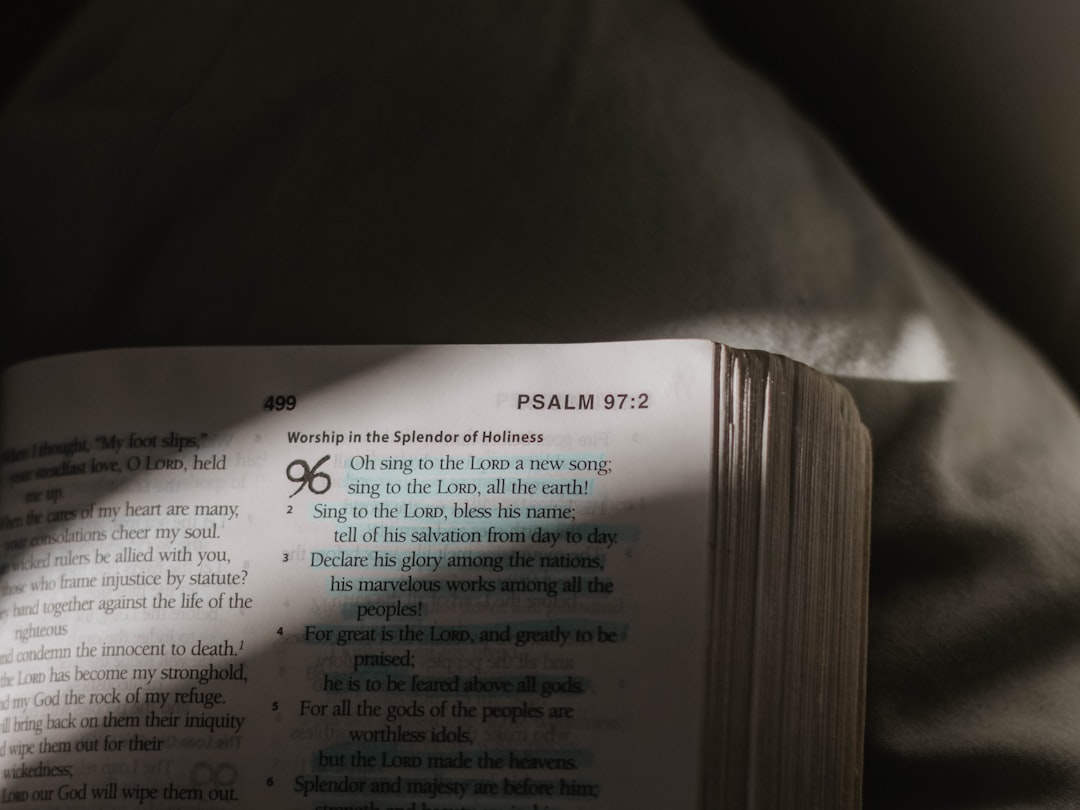
Photo by Sincerely Media on Unsplash
“In peace I will lie down and sleep, for you alone, Lord, make me dwell in safety.”
This is one of the oldest bedtime prayers in Scripture, and it’s worth reading slowly. Notice what the peace is based on: not that the circumstances are safe, not that the problems are resolved — but you alone, Lord, make me dwell in safety.
God’s presence is the safety. Not the absence of difficulty. That means you can say this verse on a night when things are genuinely uncertain, and it still holds.
“I lie down and sleep; I wake again, because the Lord sustains me.”
David wrote Psalm 3 while fleeing from his son Absalom — one of the most painful and terrifying experiences of his life. And in the middle of it, he lay down and slept. Not because things were fine. Because God was keeping watch.
Lying down is an act of trust. Sleep is only possible when you believe someone else has the night shift. God doesn’t sleep (Psalm 121:3). You can.
“Whoever dwells in the shelter of the Most High will rest in the shadow of the Almighty. I will say of the Lord, ‘He is my refuge and my fortress, my God, in whom I trust.'”
Psalm 91 is a Psalm of protection — and the image of “dwelling in the shelter” is a particularly nighttime image. A shelter is where you go when the outside is dangerous. The shadow of the Almighty is where you go when the fears feel too big.
You can pray verse 2 out loud before you close your eyes: He is my refuge. He is my fortress. I trust him. Not as a formula — as a declaration of where you’re choosing to rest your weight.
“Truly my soul finds rest in God; my salvation comes from him. Truly he is my rock and my salvation; he is my fortress, I will never be shaken.”
Rest for the soul is different from rest for the body. You can be physically exhausted and still feel a kind of inner agitation — a restlessness that has nothing to do with how tired you are.
“My soul finds rest in God” is a declaration of orientation — this is where I put my soul down. Not on the problem, not on the outcome, not on what might happen tomorrow. On God.
“The Lord is my shepherd, I lack nothing. He makes me lie down in green pastures, he leads me beside quiet waters, he refreshes my soul.”
“He makes me lie down” — sometimes rest doesn’t come naturally. It has to be provided. The shepherd does not leave the sheep to find rest on their own; he leads them to quiet water, makes space for lying down, and refreshes what’s depleted.
Let this be a prayer: Lead me to quiet. Make me lie down. Refresh what’s been worn out.
“In vain you rise early and stay up late, toiling for food to eat — for he grants sleep to those he loves.”
There’s a specific kind of sleeplessness that comes from trying to control outcomes you can’t control — working harder, planning more, staying awake to manage what isn’t yours to manage. This verse speaks directly to that.
God grants sleep to those he loves. Not those who have figured everything out, not those who have prepared for every contingency. Those he loves. Which includes you.
“He says, ‘Be still, and know that I am God; I will be exalted among the nations, I will be exalted in the earth.'”
“Be still” in this context means: stop striving, stop fighting, stop trying to manage what you can’t manage. The second half of the verse is the reason: I am God. The world will not fall apart without your oversight tonight. God is still God in the dark.
Let this one roll slowly through your mind as you try to sleep. Be still. He is God. Be still. He is God.
If 2am anxiety is a recurring struggle for you, here’s a simple practice that many people find helpful:
The goal isn’t to think your way into peace. It’s to redirect your attention — from the loop of worry to the person of God.
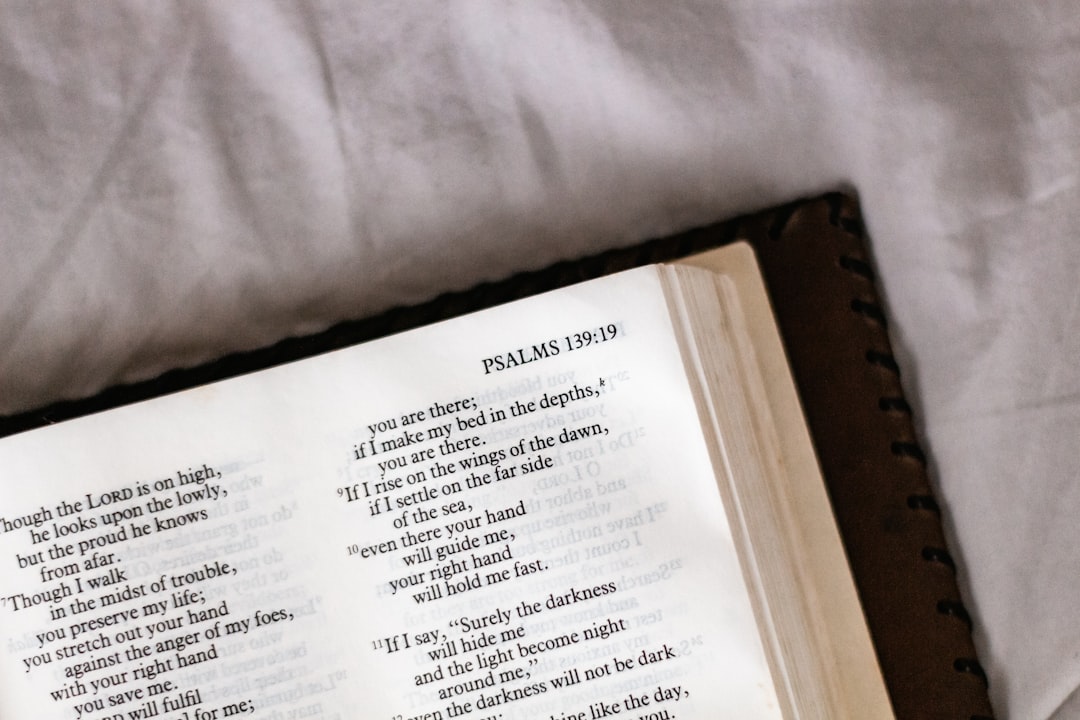
Photo by Sincerely Media on Unsplash
Sometimes your sleep is stolen not by your own anxiety but by grief for someone else. A friend in crisis, a family member who is struggling, a situation you can’t fix.
One of the most helpful things you can do in those moments is write it down — not a journal entry, but an actual note to the person. You don’t have to mail it tonight. But the act of putting words on paper, turning your worry into a tangible expression of care, can release something that lying awake can’t.
If you want something meaningful to give someone who is in a hard season, our devotional workbook has 193 pages of faith-based encouragement with perforated tear-out pages — something they can hold in their hands when the nights are hard. $14.99 with free shipping.
Morning will come. It always does.